
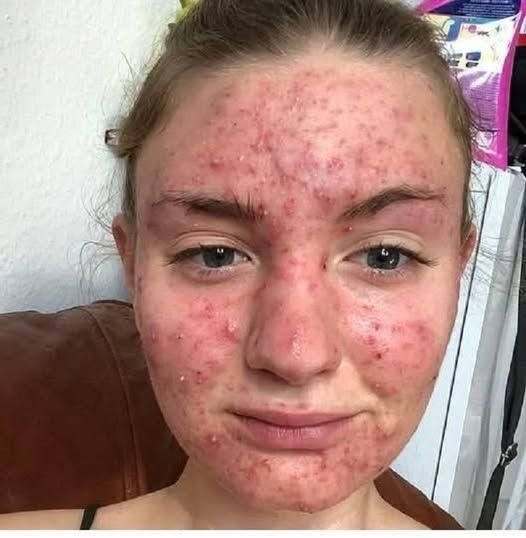
Her body was itching relentlessly, red patches spreading across his skin like wildfire. At first, I assumed it was just an allergy—maybe a reaction to new laundry detergent or something he ate. We tried antihistamines and soothing creams, but the itching only grew worse, keeping him awake at night. Concerned, I finally took him to the doctor, hoping for a quick fix and reassurance.
The doctor’s expression changed as he examined the symptoms, his casual demeanor shifting into something more serious. He ordered blood tests and scans, speaking in hushed tones to the nurses. My stomach twisted with d.r ℮ad as I watched the medical team move with urgent efficiency. Days later, the diagnosis came—not an allergy, but c.a nςer. The word hit me like a physical b.l σw, leaving me struggling to process what it meant.
Suddenly, our lives were consumed by hospital visits, treatments, and the crushing weight of uncertainty. The itching, once dismissed as a minor irritation, was now a grim reminder of the disease spreading through his body. I watched as he endured chemotherapy, his strength fading with each session, yet he never complained. In quiet moments, I replayed the early signs, wondering if we could have caught it sooner—if I had pushed for answers faster.
Now, every itch, every ache feels like a potential warning, and fear lingers in the back of my mind. The diagnosis changed everything, turning ordinary discomforts into possible threats. But amid the fear, there’s also determination—to fight, to hope, and to cherish every moment we have together. Ca. חcer may have entered our lives uninvited, but it won’t define us without a f.i gҺt.
Can Rashes Be a Sign of Cancer?
A skin rash can develop for many reasons, most of which are unrelated to cancer. Even so, a rash could be a sign of an underlying medical condition that requires treatment, such as an allergy or infection. Therefore, any unusual skin changes should be promptly discussed with a physician.
Rashes & skin cancer
Not all types of skin cancer cause a rash. For example, melanoma – which develops in the melanocyte cells that provide pigment to the skin – more often resembles a misshapen mole than a rash.
On the other hand, the first sign of basal cell carcinoma is usually a scaly, pink skin patch or a pearly bump that grows larger and becomes shinier over time. As the cancer progresses, an indentation may form in the center of the lesion, where it may begin to ooze or bleed.
Initially, a rash caused by basal cell carcinoma may resemble dermatitis, psoriasis or eczema. However, unlike a noncancerous skin rash, a cancerous skin rash will usually not resolve on its own.
Rashes & other types of cancer
Less commonly, a rash may be caused by a type of cancer other than skin cancer, such as:
- Leukemia – A blood cancer that develops in the bone marrow, leukemia is caused by the rapid production of abnormal white blood cells, which impair the body’s ability to produce red blood cells and platelets. A low platelet count can lead to easy bruising and bleeding, and broken capillaries under the skin can cause tiny red spots to form on the skin’s surface (petechiae) that resemble a rash.
- Mycosis fungoides – A type of cutaneous T cell lymphoma, mycosis fungoides occurs when certain white blood cells (lymphocytes) undergo cancerous changes that cause them to attack the skin. The early signs include itchy, rash-like skin patches, which may form sores and tumors as the cancer progresses.
- Sézary syndrome – A leukemic variant of mycosis fungoides, Sézary syndrome causes an extensive, itchy red rash over at least 80% of the body.
- Kaposi sarcoma – A type of cancer that develops in the cells that line lymphatic and blood vessels, Kaposi sarcoma can cause deep red, purple, or brown lesions to form on the skin’s surface.