

For centuries, we’ve been taught a linear progression of human history: stone tools, then bronze, then iron, culminating in our modern technological marvels. But what if that timeline is fundamentally flawed? What if advanced technology existed in eras we deem primitive, hidden in plain sight, waiting for the right moment to shatter our understanding of civilization?
Prepare to have your perception of history utterly rewritten. Whispers from the shadows of ancient civilizations speak of devices and knowledge that should simply not exist. These aren’t mere anomalies; they are profound, undeniable clues to a forgotten past, a past far more sophisticated and mysterious than textbooks dare to suggest. We’re talking about artifacts that scream ‘modern’ yet are unearthed from tombs thousands of years old, challenging every archeological assumption.
Take, for instance, the baffling discovery made deep within a recently excavated site in Egypt. Archeologists, expecting to find the usual array of pottery and rudimentary tools, instead unearthed something that defies all explanation. A small, perfectly machined metallic object, intricate beyond the capabilities of any known ancient civilization, was found embedded within a sarcophagus dating back to the Old Kingdom. Its complexity suggests a level of engineering that wouldn’t be seen for millennia. Was it an offering? A forgotten tool? Or something far more sinister, hinting at a presence that predates recorded history?
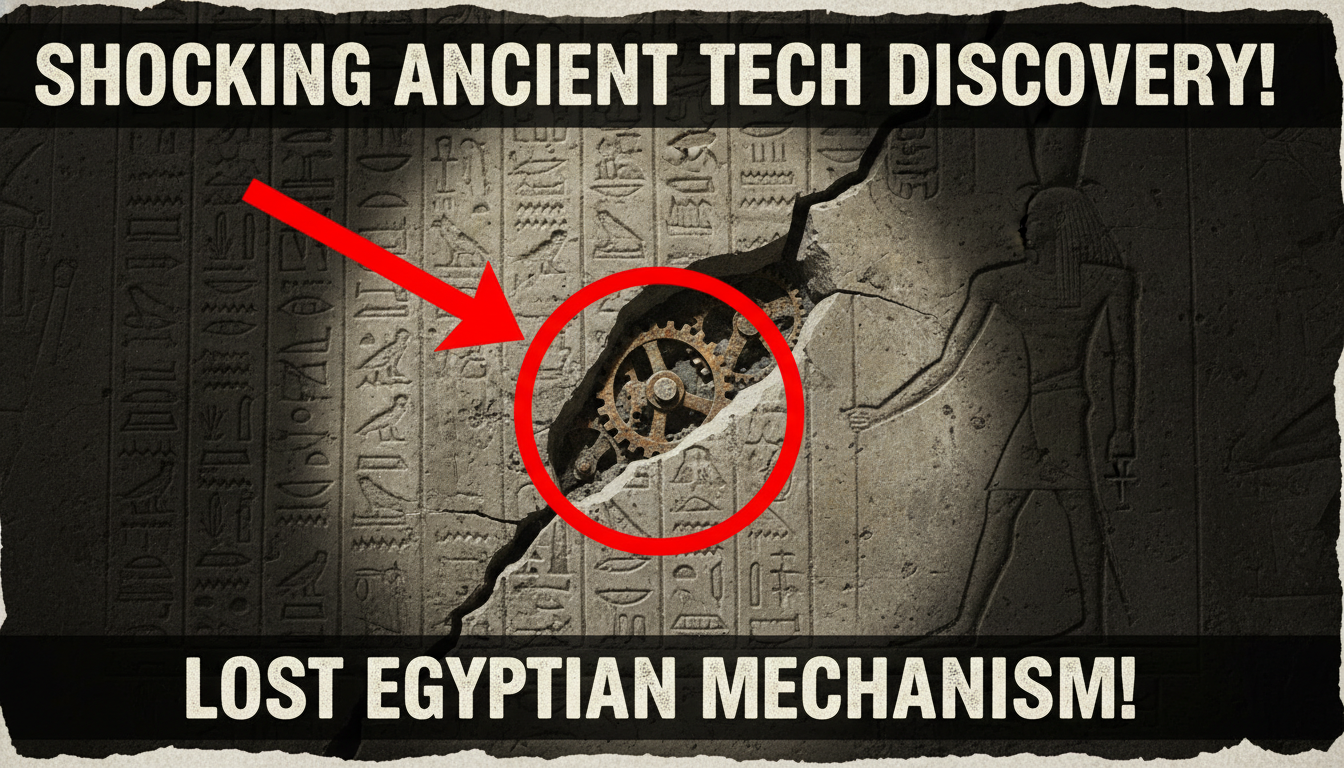
The initial reports were met with skepticism, then a stunned silence, as experts struggled to rationalize its existence. This isn’t just a curiosity; it’s a paradigm shifter.
The official narrative is crumbling. Mainstream science often dismisses these ‘out-of-place artifacts’ (OOPArts) as misinterpretations, natural formations, or elaborate hoaxes. But how many coincidences does it take before we acknowledge a pattern? The evidence is piling up, suggesting a pre-diluvian civilization, or perhaps even extra-terrestrial influence, that left its indelible mark on our world, subtly guiding or even jump-starting technological progress.
And it doesn’t stop there. Another recent find, this time from a remote South American dig, presented an equally perplexing riddle. Within the ruins of a pre-Incan temple, a non-corrosive, almost glass-like conduit was discovered, running through solid rock for hundreds of feet. Its internal structure suggests it was designed for fluid transfer or even data transmission, yet it was found in a culture that hadn’t even mastered the wheel.
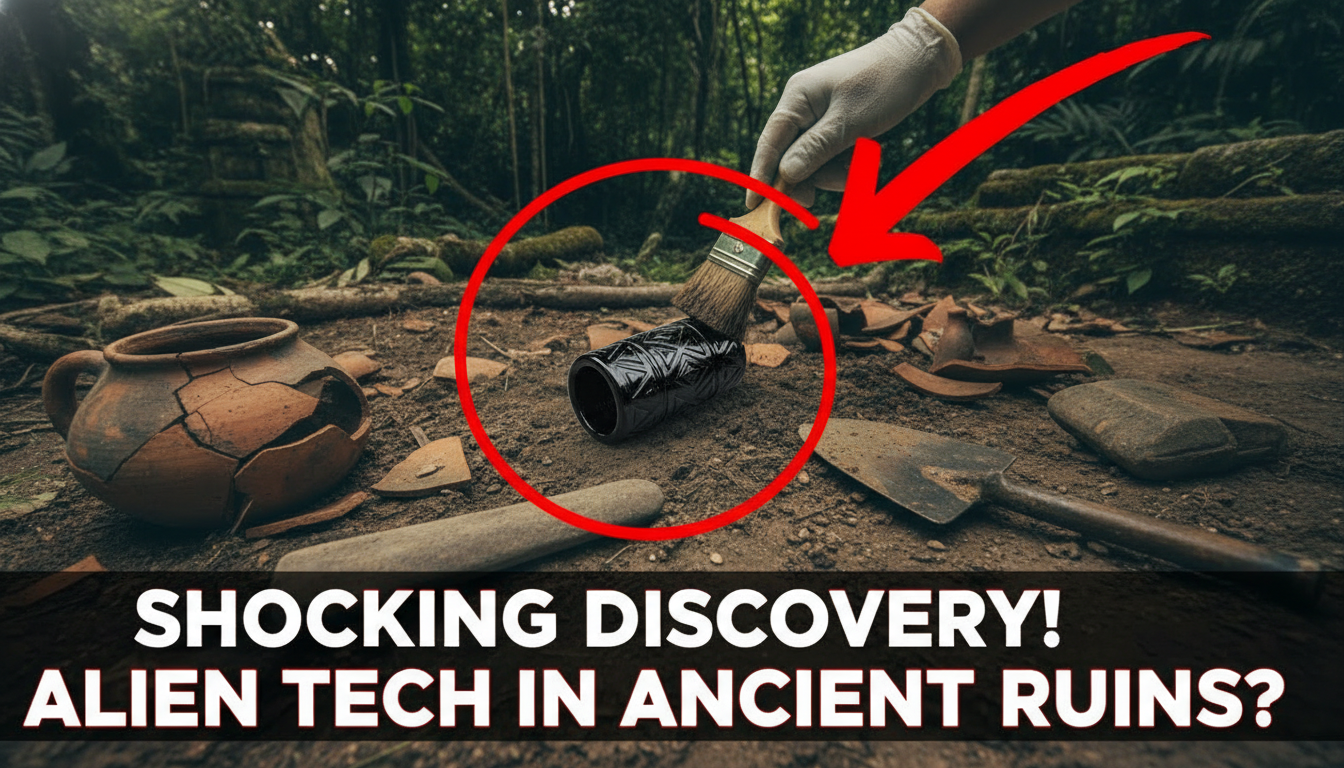
The material itself is unknown to modern metallurgy, resisting all attempts at identification. How did ancient peoples achieve such feats without advanced tools, knowledge of physics, or complex manufacturing processes?
Could it be that we’re not the first advanced civilization to walk this Earth? Or were ancient humans somehow assisted by visitors from other worlds, leaving behind remnants of their superior technology? The implications are staggering. If ancient civilizations possessed technology far beyond our current understanding, what else have we overlooked? What other secrets lie buried, waiting to reveal a truth that could redefine humanity’s origin and destiny?
The answers could unravel the very fabric of our reality, forcing us to confront a past far more complex, wondrous, and perhaps terrifying than we ever dared to imagine. The truth is out there, embedded in the very foundations of our history, waiting for those brave enough to see it. And once you do, you won’t be able to unsee it.